Welcome to my world as a voice-over artist
Discover my thoughts on the voice-over profession and my journey.
Sonia Tadjdet
10/26/20252 min read
I’m Sonia, a multidisciplinary voice-over artist and globetrotter, with a background in theatre, cultural mediation, audiovisual production, events, and now podcasts.
Today, I want to talk about the voice-over profession — a field still little known — which has gained popularity with the rise of digital media… and is now under threat.
So, what is a voice-over artist?
Typically, it’s an actor with classical training in theatre or film who focuses their work on the voice, using it to convey emotions and give weight to a message.
For me, the encounter with this essential tool of the actor happened in 2003. While studying theatre in Paris, I was offered the opportunity to host a French-language cultural TV show for the Algerian national channel (ENTV) for one season, alongside my studies.
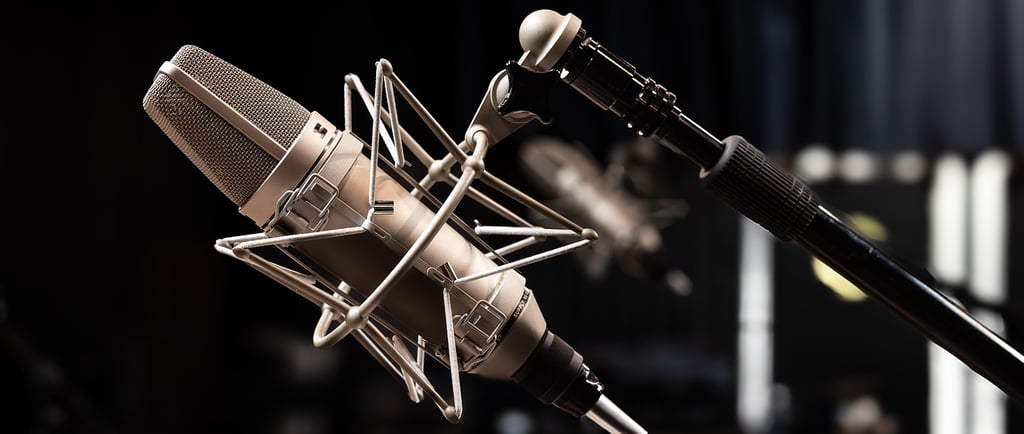
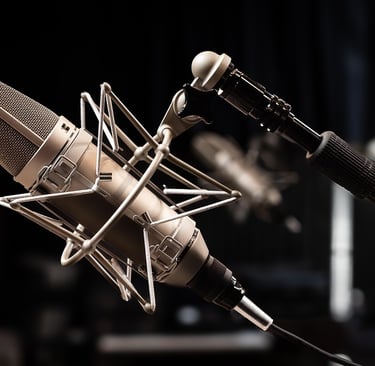
For the first time, I stepped into a speak booth, sat in front of a microphone, and read aloud a text — usually the program summary or voice commentary for our reports. And I discovered a real joy!
My voice, which I hadn’t particularly appreciated until then, changed. In front of the mic, it became rounder, calmer. It charmed me. Yet after one year of this wonderful experience, I put it aside, almost like a guilty pleasure I barely owned.
Many years later, after returning to university studies, I got a job in audiovisual production for corporate films. By chance, I found myself back in a speak booth, in front of a microphone, recording narrations and dubbing. The joy returned.
With maturity, it was no longer shameful, but fully embraced. Alone in my booth, with the director’s instructions in my ears, I could fully express my potential as an actor.
Because this is where the core truth lies: the voice is not just an instrument. It’s a tone, a posture, a smile, a breath, a silence… even a gesture.
Trained at Les Coachs Associés, I learned to transpose everything I had acquired on the theatre stage to the microphone — or perhaps to unlearn it, to reclaim it in a new way.
Mastering an instrument where every nuance becomes a melody.
It becomes clear that voice-over work is not about pressing a button. It’s about approaching a text like a musical score, while infusing it with a part of yourself — something uniquely personal.
Today, this voice, the product of work, sensitivity, and years of experience, is often replaced or undervalued in favor of automated tools or rock-bottom rates. Yet no machine, no algorithm, can ever convey genuine emotion, a breath, a human intention.
But perhaps the danger does not come from technology alone, but from the desensitization of the listener.